
蜘蛛侠
《长城对话》新闻IP研讨会|颜谙:新闻IP出圈破圈靠什么?_我的网站

一 |
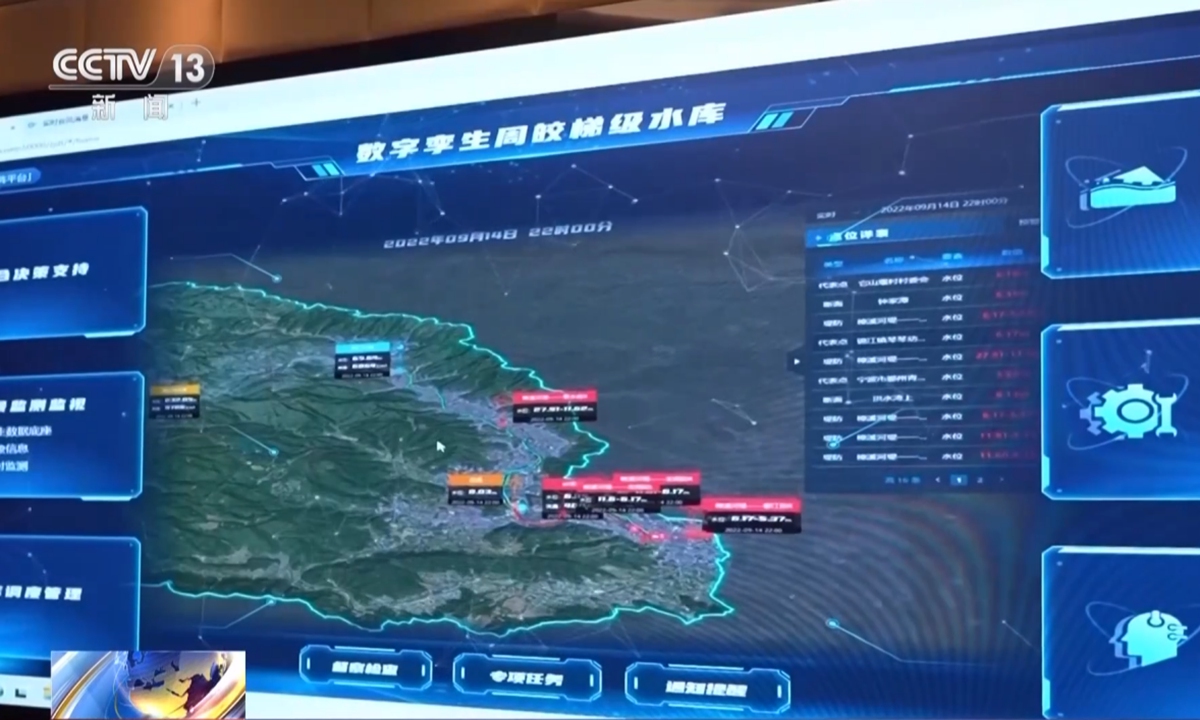
From AI-powered flood forecasting and digital twins to smart reservoir management, phased-array radar networks and ground-based remote sensing systems, a new generation of high-tech equipment and systems is helping Chinese cities sharpen weather forecasts, improve flood control and make faster, more precise decisions to stay one step ahead of extreme weather.
In Ningbo, East China's Zhejiang Province, where water resources are relatively limited, the calculation of reservoir water release is tricky. If you release too much, the city could find itself short of water after the storm, however if you release too little, the reservoir may struggle to accommodate the floodwater brought by torrential rain.
Finding that balance is now increasingly a job for AI.
"The balance point has to be continuously analyzed and calculated by the dispatching software," Jiang Yutian, a department director at the Ningbo Water Conservancy & Hydropower Planning and Design Institute Co., Ltd., said, according to CCTV News.
At the heart of the system is an AI forecasting model that dramatically speeds up calculations.
For the Yongjiang River basin, running a complete flood-control scenario used to take five to 10 minutes. The new model can complete the calculation in just five to 10 seconds, cutting the time required to around one-sixtieth of the previous level.
Using rainfall forecasts and changing water levels, the model refreshes its recommendations every five minutes, calculating how much water should be released, how much can be stored later and how much reservoir capacity will remain when the flood peak arrives. Dispatchers can then adjust water releases in real time, per CCTV's report.
AI is not working alone. A digital-twin dispatching platform allows reservoirs to be managed together rather than individually. Across Ningbo's 16 major medium- and large-sized flood-control reservoirs, operators can see in real time which are approaching capacity and which still have room to take more water.
Hundreds of kilometers inland, another city is using a different technological set of technologies to tackle the same challenge of weather uncertainty.
Nanyang in Central China's Henan Province, which lies in a basin surrounded by mountains on three sides, has experienced widespread heavy rainfall since Monday under the influence of Typhoon Dolphin. Its geography leaves the city exposed to a combination of risks, including urban waterlogging, flooding in small and medium-sized rivers and inundation of farmland.
To track storms more precisely, the Nanyang meteorological authority has deployed a network of four newly installed X-band dual-polarization phased-array radars, together with an S-band dual-polarization radar and a ground-based vertical remote sensing system, according to the China Meteorological Administration.
The equipment allows forecasters to closely track the development and movement of convective clouds and identify areas at risk of intense rainfall earlier.
The city's meteorological authority has also integrated weather data with a citywide video monitoring network covering vulnerable locations such as underpasses, tunnels, river embankments and mountainous villages. This allows forecasters to compare what instruments are detecting with what is actually happening on the ground.
Together, the approaches in Ningbo and Nanyang offer a glimpse of how China's weather-disaster prevention efforts are becoming increasingly digital and intelligent, using faster calculations, denser observations and real-time data to bring greater certainty to decisions made in the face of uncertain weather.
Global Times
。 8月15日,长城新媒体集团举办《长城对话》新闻IP研讨会。人民日报社《新闻战线》杂志总编辑赵永平,凤凰卫视集团编委、凤凰网副总裁、总编辑吴晨光,中国日报网闻颜闻工作室主理人颜谙三位传媒界专家和媒体人应邀出席,围绕品牌栏目建设、新闻IP打造等议题展开深度交流与对话。

二 | 当谈到新闻IP出圈破圈靠什么时,颜谙提出要从选题和视觉风格上入手,打造节目的专属辨识度。

三 | (长城网·冀云客户端记者 康紫祎 刘梦妍)。

四 |
Current article:http://83y4.niaozaogunbaizhaiguaweng.bond/qwdpg/67ovg1.html
Published on:01:43:03
上一篇:【收评】铁矿日内上涨0.49%机构称基本面供给增加、需求下降,铁矿石延续区间震荡
下一篇:雨量超越“利奇马”“巴威”,“白海豚”预计今天中午前后移出浙江!杭深铁路、杭台高铁、杭温高铁、沪昆高铁等多条线路列车恢复开行
下一篇:雨量超越“利奇马”“巴威”,“白海豚”预计今天中午前后移出浙江!杭深铁路、杭台高铁、杭温高铁、沪昆高铁等多条线路列车恢复开行
 Met Police: Officers getting away
 浙江宁波舟山港绿色甲醇燃料加注实现“三级跳”,浙江宁波舟山港绿色甲醇燃料加注实现“三级跳”
 Yellamma Makers on a Quest to Find Devi Sri Prasad's Leading Lady
 8 dead, 5 injured in explosion in Somalia
 两岸专家聚榕交流运动防护康复
 王婆江西说媒被彩礼震惊?本人回应:自己不可能把彩礼打下来,也不便多言
我的网站最新内容
- ·不是后门是事故!Windows XP最火盗版密钥真相:微软自己泄露的
- ·4,220-year-old rock art in SW China’s Yunnan reveals early cultural links with Southeast Asia
- ·特斯拉S/X75D型号即将绝版:你不能用钱买新的。
- ·百日千万招聘专项行动推出八万余人次需求
- ·“塘街夜市”解锁双倍烟火气
- ·广东兴宁市大坪镇性侵案已移送检察机关
- ·心碎!夏普遭半月板撕裂 随后注销19万INS账号
- ·英菲尼迪的首款纯电动汽车QX灵感车,即将量产。
- ·180 iron nails along with magnets and other objects removed from a man’s stomach, weighing more than 1 kg in total: media
- ·曹庄镇:以环境之美提升村民幸福指数
- ·摩托罗拉Moto P40/Z4 Play Shell渲染曝光:前者使用穿孔屏幕
- ·月之暗面回应K3:做难而正确的事,不惧马斯克挑战
- ·AI链启动,上下游全面扩产
- ·走在乡间小路上丨太行鸡鸣土岭上
- ·现在可以在 DoorDash 上购买数字版游戏了
- ·绥芬河“宽轨重出”模式落地运行 运输时效压缩50%以上,绥芬河“宽轨重出”模式落地运行 运输时效压缩50%以上
我的网站热点内容
- ·日本本州岛5.8级地震已致多人受伤,截至当地时间23日3时,已接到约30起与地震有关的报警
- ·40℃的伏天,这茶一入口:香、透、清、亮、鲜、灵、甜、妙!你就喝吧,一喝一个不吱声
- ·卖了三亿台手机,realme怎么突然就不玩了?
- ·银龄共富工坊点亮“夕阳红”
- ·电讯报:曼联去年前场重组获得信心 分散资金签3名中场而非砸1人
- ·中国人民银行:前7个月人民币存款增加17.79万亿元
- ·沈腾又做了徐福烩饭 线上发起复刻大赛掀美食热潮
- ·新款路虎揽胜星脉上市 售价56.8-78.8万元 0-100/h加速最快5.5秒
- ·2024年宇航领域十大科学问题和技术难题发布
- ·Bha Bha Bha Trailer Arrives With Dileep and Mohanlal Sharing The Spotlight
- ·辽宁师范大学龙潭大峡谷教学实践基地揭牌成立
- ·玩家国家吃馅饼:华硕Rog Android 9升级可能即将到来
- ·TCL发布阿尔卡特1X/1C智能手机:约548元
- ·港口大豆高库存与豆粕边际去库形成对冲,供应端整体宽松但短期压力边际缓解
- ·台风“简拉维”减弱为热带低压,或于今天白天在福建近海减弱消散,浙江、福建、广东、江西、湖南、湖北、海南、台湾等有大到暴雨
- ·小米 YU7 GT 创纪录后,梅赛德斯-AMG 也来纽北测自动驾驶